Season notes
Resin versus plastic-teak patio tables through a full working day
Two patio tables can have the same outline and ask very different things of the closing crew. One stays in place through service. Another is moved for every wash-down or brought inside when the terrace closes. Decide which job the table must do before choosing the surface you prefer.
Comparing resin versus plastic-teak patio tables works best with complete listings beside the patio plan. The top, base, selected dimensions, and stated outdoor use belong in the comparison together. Begin with the resin patio tables and the plastic-teak table collection, then keep only candidates that fit the same dining position.

Open diagram at full size (new tab) ↗
Read the diagram in text
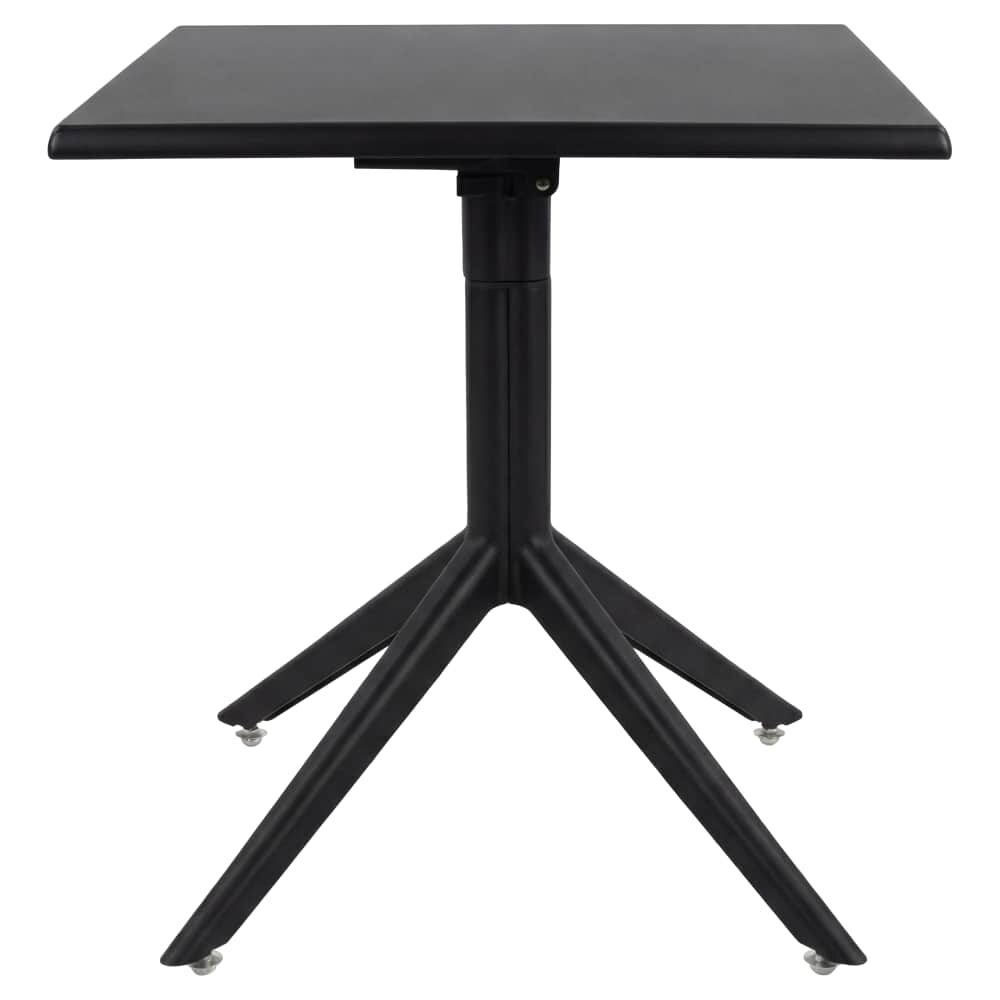
The selected folding resin table lists a resin top and base. The synthetic-teak top option is paired with an aluminum base. Both list 30-inch table height and included bases. Their offered size menus differ.
- OPEN DOOR / FURNITURE NOTES
- RESIN TABLE
- Resin top
- Resin base
- Listed table height: 30 inches Base included in these listings
- SYNTHETIC-TEAK OPTION
- Synthetic-teak top
- Aluminum base
- Listed table height: 30 inches Base included in these listings
- Choose exact sizes before comparing surface area, fit, and storage work.
Read what the material name describes
The collection name is a starting point. Open the individual product and check which material belongs to the top, which belongs to the support, and whether the price refers to a complete table or a component. A wood-like appearance doesn't identify the material underneath.
Copy the listing's actual terms into your comparison. If it says synthetic teak, keep that wording; don't change it to solid teak when discussing the table with your team. Likewise, a resin tabletop doesn't tell you that the base uses resin. Each component needs its own line.
The folding resin patio table lists a resin top and base, with a table height of 30 inches. The aluminum patio table with a synthetic-teak top option also lists a 30-inch table height and an aluminum base. Both include a base, but their size menus differ. Select the actual versions before comparing their surface area or storage needs.
Two questions clear up much of the early confusion:
- What arrives for a quantity of one in the selected configuration?
- Which top and support are included at that displayed price?
Review any options before copying the amount. Another size or support may produce a different configuration. The outdoor buying guide explains how to keep intended use attached to that exact selection throughout the order.
Give both candidates the same place setting
Use the meal to set the comparison. Put the plates, glasses, and shared items on a full-size outline of the proposed top. Try the shape you are considering rather than transferring the place count from a different table.
For a worked surface comparison, a 30-inch square provides 900 square inches before anything is placed on it. A 36-inch square provides 1,296 square inches. The larger surface adds 396 square inches, but it also extends farther into the patio. That arithmetic describes the top, not how many guests the final arrangement can serve.
The round-versus-square table guide takes the shape decision further. Keep the occupied chairs in the sketch while trying each version. Check the area around a promising top with people seated and moving between the tables.
What happens when two guests share several dishes? Run that setting too. The small table-mix guide helps you compare repeated small tables with a smaller number of larger ones, without assuming the same mix works for every service.
Look below the top
Support geometry can settle a choice that looks close from above. Place the selected chairs around each table, then check whether the base interferes with a guest's feet. Watch where the legs sit when a chair is pulled out. The underside deserves a photograph of its own.
If you are buying separate components, obtain the approved top and base pairing before treating them as a finished table. Similar colors or matching nominal dimensions don't resolve the attachment or support requirements. Browse outdoor table bases only after recording the top that must be supported.
Try the whole arrangement on the intended surface. A flat showroom floor and a patio paving joint are different tests. The outdoor table stability guide walks through the ground and contact points; it is useful before choosing a heavier table to address a problem that may start beneath it.
Keep umbrellas in a separate, checked decision. A hole in a tabletop is only one part of an umbrella arrangement. Match the opening, support, and required clearances through the umbrella-placement guide before placing either table under a shade plan.
Compare the morning and the afternoon
The patio changes through the day. Walk the positions when the sun reaches them, note where rain lands, and check where furniture waits before opening. Those observations help you ask useful questions about the two exact products.
A material label alone won't predict the temperature of a surface or how it will look after repeated cleaning. Ask for the relevant care instructions and, where available, a finish sample. The direct-sun guide explains why the time of the visit matters as much as the sample's color.
For cleaning, compare the instructions with the products and equipment your staff already use. If they conflict, resolve the cleaning routine before choosing the table. Keep the approved cleaner and method with the furniture notes rather than relying on an old bottle's label.
The local-climate guide can help you describe the exposure. On a sheltered terrace, the uncovered edge may need a different review from the places beneath the roof. Mark those positions separately instead of calling the whole patio covered.
Price the work around the table
The purchase comparison should use equal quantities and complete configurations. Freight, receiving services, and any assembly belong on separate lines. An unanswered cost stays visible until it is quoted; entering zero makes the cheaper column look more certain than it is.
For a worked handling count, say a terrace has eight tables and each is moved into storage and back once per operating day. That creates 16 table moves. Use the chosen product's stated weight and handling instructions when planning the work, without assuming one person can carry it.
Check these two costs with the actual routine:
- Staff time and equipment needed for the daily move, if the patio is cleared.
- The storage space and protection required by the selected table's instructions.
The seasonal cost guide helps you keep those expenses separate from the initial purchase. If a candidate folds, confirm that feature and its operation on the exact listing before allocating a smaller storage position.
Keep the comparison beside the first table
Choose the table that fits the meal, the patio, and the work you have actually planned. Keep the rejected candidate's notes too. They explain why a different finish or lower starting price didn't settle the choice.
At receipt, compare the first complete table with the selected dimensions and included components before arranging the whole terrace. Set out the same meal used in your trial. A marked position, a clear configuration, and one familiar place setting give the team something concrete to check.